Search This Blog

Friday, April 29, 2011

mitsubishi outlander sport 2011


It was originally known as the Mitsubishi Airtrek when it was introduced in Japan in 2001, and was based on the Mitsubishi ASX concept vehicle exhibited at the 2001 North American International Auto Show. The Outlander nameplate which replaced it evoked a "feeling of journeying to distant, unexplored lands in search of adventure. It offered a choice of either a 126 PS (93 kW) 4G63 2.0 L or a 139 PS (102 kW) 4G64 2.4 L GDI, mated to a standard INVECS-II 4-speed semi-automatic transmission. Both front- and four-wheel drive were available. The four-wheel drive version uses open differentials for the front and rear axles, with a viscous coupling unit for the center differential. A high performance model, using a detuned version of the Mitsubishi Lancer Evolution's 4G63T 2.0 L turbo, was introduced in 2002.

mitsubishi outlander

mitsubishi outlander
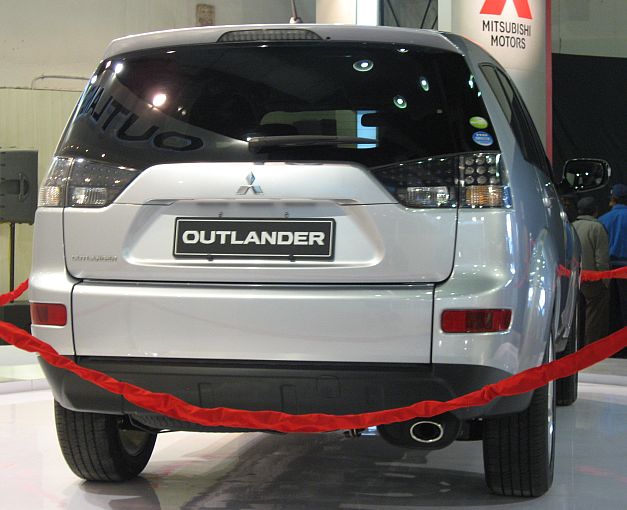
mitsubishi outlander

mitsubishi eclipse used & new cars

The Mitsubishi Eclipse is a coupe that has been in production since 1989 for right hand drive markets. According to Mitsubishi, the car was named after an 18th century English racehorse which won 26 races,[1] and has also been sold as the Eagle Talon and the Plymouth Laser captive imports through Mitsubishi Motors' close relationship with the Chrysler Corporation. It was the first concept vehicle exhibited by Mitsubishi at an auto show in the U.S.[4]
The 4G63 was replaced by two powertrain options, a 147 hp 2.4 L 16-valve SOHC 4-cylinder 4G64 and a 205 hp 24v SOHC 3.0 L V6 (6G72). AWD was no longer an option. The suspension setup was adjusted to provide a softer and more compliant ride quality.
No longer considered to be a DSM, it shared its platform and powertrain with the 8th generation Galant. Weight was also up slightly from the previous year's model. In late 2001, power was lowered to 200 hp (150 kW) as a result of tightened emission standards forcing MMNA to adopt the California standards for all variants of the car. The 2011 Mitsubishi Eclipse now features a "blackout" roof, similar to the 1990 version. For 2011, Mitsubishi has lowered the suspension of Eclipse about half an inch, which creates a lower center of gravity.


Thursday, April 28, 2011

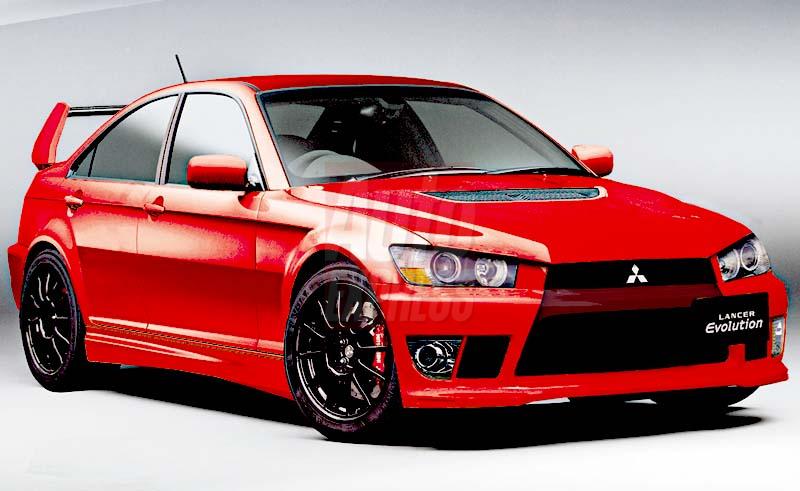
mitsubishi lancer evolution x

top speed fast cars mitsubishi lancer evolution x

mitsubishi lancer evolution x in beautifull white colour

mitsubishi lancer evolution x read

Wednesday, April 27, 2011

BMW ActiveE


BMW ActiveE


The original BMW ActiveE concept shown last year looked nearly production ready -- and given the specifications on the production test vehicles, it seems that it may have been. The powertrain and nearly-stock 1 Series body of the test vehicles is virtually identical to the concept, suggesting that the last year of development was spent fine-tuning the electric vehicle's sensitive electronics.
As the powertrain is also identical to the concept, the ActiveE test vehicle uses an electric motor housed in the rear axle for propulsion. It produces 127 kilowatts (170 horsepower) and 184 pound-feet of torque, which can propel the ActiveE from 0 to 60 mph in an estimated 8.5 seconds. Power is supplied by a battery pack developed by BMW, Bosch, and Samsung. BMW hasn't revealed how much energy can be stored in the pack, but says it gives the ActiveE a range of roughly 100 miles. It can be recharged in four to five hours using a 220-volt, 32-amp charging station, but BMW claims that the ActiveE will be able to go 25 miles after only one hour of charging.
While the electric drivetrain may be the highlight of the ActiveE, it certainly isn't the only talking point. BMW bestowed the car with a number of ideas from its Vision ConnectedDrive concept, which will also be at the Geneva Motor Show. ActiveE drivers will be able to use their iPhone or iPad to lock and unlock the vehicle, locate it, control battery charging, view the battery state of charge, and to pre-condition the car (i.e. turn on seat heaters, AC, etc., and even heat or cool the batteries while still plugged in).
Although the ActiveE is a test vehicle, it may be our best look yet at the powertrain slated for the upcoming MegaCity Vehicle, as the ActiveE "incorporates a pilot series version of the same drivetrain and batteries planned for the MCV." In addition to incorporating the drivetrain of the ActiveE into the MCV, BMW will also incorporate owners' feedback to further enhance its upcoming MegaCity Vehicle.
A total of 1000 vehicles will be deployed throughout the U.S. and Europe.

BMW ActiveE
BMW ActiveE
BMW ActiveE

Check Dealer Pricing On a New BMW!


Check Dealer Pricing On a New BMW!
BMW's series of Vision concepts have traditionally displayed ideas or technologies the automaker believes will be key to future automobiles. The new BMW Vision ConnectedDrive concept coming to the 2011 Geneva auto show appears to abide by that formula.
BMW hasn't released any powertrain specifications or mechanical details -- that's not surprising, as the ConnectedDrive is purely meant to push the boundaries of design, particularly when it comes to the human-machine interface (HMI). According to the Bavarian automaker, the concept "extrapolates the principle of intelligent networking of drive, vehicle, and the outside world." Roughly translated, there's some fanciful technology packed into the interior.
The ConnectedDrive's cabin design is remarkably simplistic, consisting largely of a single gauge binnacle, a shifter and iDrive controller on the center console, and a sweeping dashboard. This design is largely possible by adopting an advanced 3-D heads-up display, which can arrange information -- including navigation directions -- into the foreground and background, depending on the importance. A secondary display, located above the steering column, appears to house secondary information, including GPS maps, gear selection, and other items.
Although that feature may be more playful than prescient, the Vision ConnectedDrive may be rather rooted in reality. BMW may or may not be looking at adding a sub-Z4 roadster to its portfolio (particularly one with Z1-style sliding doors), but we hear a number of design cues -- particularly the front fascia and the L-shaped tail lights -- are precursors to design cues that will appear in future BMW models. Even the cabin's technological highlights -- including the fanciful 3-D HUD -- are already being pursued by several automakers for use in production vehicles. BMW suggests a similar display could potentially be incorporated into its future electric models, including the MegaCity commuter car and the i8 sports coupe.


Check Dealer Pricing On a New BMW!

2012 Aston Martin Virage


2012 Aston Martin Virage


2012 Aston Martin Virage
You'd have to be a real Aston Martin aficionado to spot the differences between the DB9 coupe and the new Virage. Even Aston design chief Marek Reichman concedes the differences between the two cars are quite subtle.
In case you're wondering, the Virage gets crisp new front fenders, more muscular fascias front and rear, new sill extensions, and even new rear fenders -- DB9 units that are re-stamped in a secondary process to pump them out over the wider rear tires. Changes inside include new stitching on the leather seats and upgraded switchgear.
2012 Aston Martin Virage Rear Three Quarters
It's not obvious stuff. So why do it? "The Virage sits between the classic, elegant DB9 and the very overt and sporting DBS," says Reichman. "This is more edgy than the DB9, with more horsepower, but it is also more refined."
That sounds like a death sentence for the DB9, as most Aston buyers aren't the types to worry too deeply about finding more money for their new car. But maybe there's method in Aston's madness.

2012 Aston Martin Virage

Ferrari FF


Ferrari FF


Amedeo Felisa, Ferrari's chief executive and veteran engineer, says his all-new Ferrari FF four-seater is as fast around a track as a 599. "Not the GTO," he adds hastily, "but the regular 599." For the FF to be as fast as the shattering (and shatteringly hard-to-drive) GTO would be impossible. For it to be as quick as the regular 599 is merely miraculous.
Ferrari people are suspiciously keen to stress the Ferrari-ness of their new car. Could this be because the last time they strayed from their supersports heartland with the California, they suffered a squall of criticism for going soft and selling out?
Well, if the California tore the envelope of the traditional Ferrari ideal, then the new FF straight-up shreds it. It's got four adult-sized seats, a hatchback, and all-wheel-drive.
But here are some stats that might nudge it back towards Ferrari-ness in your mind. The car retains a 53-percent rear-axle weight distribution, and that weight is just 220 pounds more than a 599. Which, incidentally, makes it some 1000 pounds less than its nearest conceptual rival, the new Bentley Continental GT.
At 8000 rpm, the FF's new 6.3-liter direct-injection V-12 generates some 651 horsepower. Did that get your attention? It means a better power-to-weight ratio than the 599 GTB Fiorano, never mind the 612 Scaglietti, which the FF replaces. The über-responsive seven-speed dual-clutch gearbox is mounted as a rear transaxle, aiding weight distribution. As a result, Ferrari can plausibly claim a 0-62 mph figure of 3.7 seconds.
Felisa says the 612 Scaglietti accounted for just 10 percent of the company's worldwide sales, and that wasn't enough. His head of product marketing, Nicola Boari, said customer requirements were important in determining the direction of the new car, which in turn impacted the concept and execution. So it can seat four 6-foot, 2-inch occupants and carry two golf bags, or offer 15.9 cubic-feet for four weekend bags, or with the rear seat folded, two sets of vacation luggage -- all of which are accessible through the FF's hatchback. A full rear-seat AV system is available. And the AWD system means it's usable in wet climates.

Ferrari FF
Ferrari FF
Ferrari FF